The products shoppers want are often available nearby. They are simply invisible.
A shopper looking for a specific product, size, colour, price or offer can search millions of online listings within seconds. But when that same product is sitting on a shelf at a physical store nearby, discovering it before making the trip is often surprisingly difficult.
This is one of the biggest gaps in modern retail.
Consumers have become accustomed to real-time digital discovery, while physical retail still operates largely around store visits, fragmented inventory systems and disconnected channels.
Behind this consumer problem lies an even bigger challenge for retailers.
Brands have invested heavily in POS systems, ERP platforms, e-commerce platforms, inventory management systems and marketplaces. Yet sales, inventory and demand data often remain fragmented across stores, channels and technology systems.
Retail teams may know what sold, but getting a complete picture of where demand is moving, which stores are losing opportunities, what inventory is moving slowly, and where size, colour or availability gaps are affecting sales can still be difficult.
UONEX Is Building the Demand Infrastructure for Physical Commerce
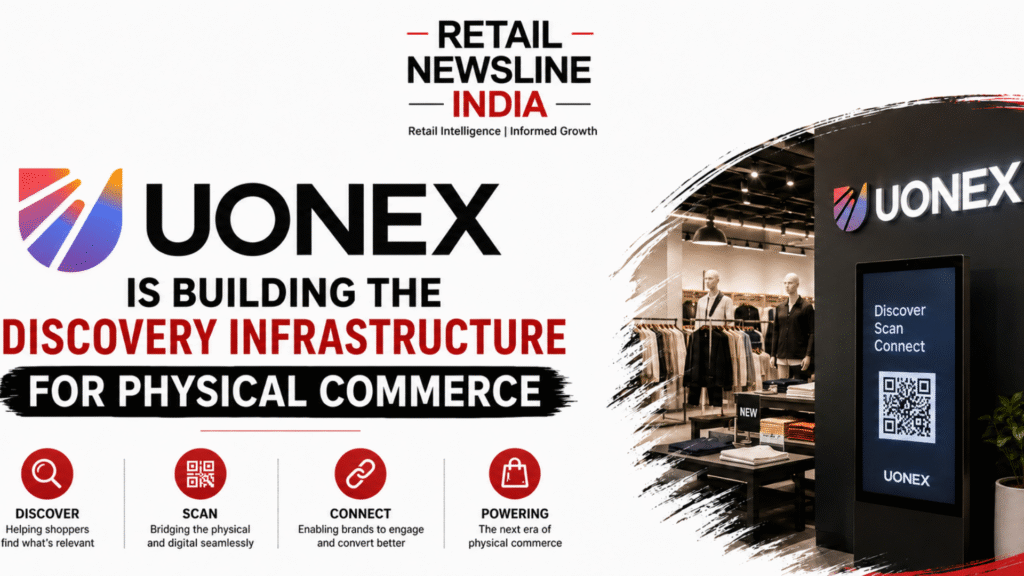
UONEX is building the Demand Infrastructure for Physical Commerce to address both sides of this problem.
Its Unified Retail Intelligence platform connects fragmented online and offline retail systems and creates a consolidated intelligence layer for understanding business performance, inventory and customer demand.
Importantly, the proposition is not about forcing retailers to replace the technology they already use.
Instead, UONEX aims to work across existing systems and bring fragmented retail data together so brands can develop a clearer view of their operations and identify actionable opportunities.
Retailers can use this intelligence to understand:
- Store-level sales and performance
- Inventory availability and movement
- Slow-moving products
- Product and category trends
- Size and colour availability gaps
- Cross-channel demand patterns
- Store-level growth opportunities
- Potential inventory and demand mismatches
The objective is simple: turn fragmented retail data into actionable intelligence.
From Retail Intelligence to Product Discovery
The bigger opportunity, however, extends beyond analytics.
Once physical retail inventory becomes connected and structured, another problem can begin to be solved: discoverability.
Today, a shopper searching online can quickly find products across e-commerce platforms. But finding out whether the same product is available at a nearby physical store is often far more difficult.
UONEX is working toward changing that.
By connecting retailers and their physical inventory, the platform can enable shoppers to discover products available at nearby stores before deciding where to shop.
This creates a bridge between digital discovery and physical commerce.
Instead of asking:
“Where should I shop?”
the consumer can increasingly ask:
“Which nearby store has what I want?”
That shift could fundamentally change how consumers interact with physical retail.
Making Physical Stores Digitally Discoverable
UONEX says it has already connected 72 brands, more than 800 physical stores and over 200,000 searchable SKUs.
The company’s current focus is on strengthening its retail intelligence layer while expanding connected supply across fashion and lifestyle brands.
The significance of this model goes beyond the number of stores or SKUs connected.
It is about creating the infrastructure required to make physical retail searchable, discoverable and demand-aware.
For decades, physical stores have represented one of the largest sources of inventory in retail, but much of that inventory has remained invisible to digital shoppers.
A store may have the exact product a customer needs, yet if the customer cannot discover it, that inventory effectively remains disconnected from digital demand.
UONEX Creating Direct Demand Towards Retailers
One of the important distinctions in UONEX’s approach is its relationship with retailers.
Unlike a conventional marketplace, UONEX does not seek to own the transaction or replace the retailer’s customer relationship.
The objective is to direct demand toward the retailer while allowing the brand to retain its customer relationship, commercial control and existing operating systems.
That makes the model particularly relevant for established retailers and brands that already have physical stores, inventory infrastructure and customer relationships but need better connectivity between those assets and digital demand.

The founding team behind UONEX, building the Demand Infrastructure for Physical Commerce.
Why Physical Commerce Needs a Discovery Layer
The evolution of retail has largely followed this path:
Physical retail → POS → ERP → E-commerce → Omnichannel → Unified Intelligence → Physical Commerce Discovery
The next stage may not simply be about putting more products online.
It could be about making the products already available in physical stores discoverable online.
This has implications for several areas of retail.
For Retailers
Better visibility into demand and inventory can help retailers identify missed sales opportunities, improve inventory utilisation and make more informed store-level decisions.
For Brands
Connected store inventory can potentially increase the digital visibility of products that would otherwise remain limited to physical footfall.
For Shoppers
Consumers can discover products based on actual nearby availability rather than relying solely on online listings.
For Physical Stores
Stores can become more than destinations that customers visit after discovering a product. They can become discoverable destinations within the digital shopping journey.
The Future of Retail May Be Less About Online vs Offline
The traditional debate around online versus offline retail is increasingly becoming outdated.
Consumers do not necessarily think in channels.
They think in terms of:
What do I want?
Where can I find it?
Is it available?
How quickly can I get it?
Which option is most convenient?
The retailer that can answer those questions most effectively has an advantage.
This is where infrastructure companies like UONEX could play an important role.
By connecting retail systems, inventory and demand intelligence, the opportunity is to create a more seamless relationship between digital intent and physical availability.
Building the Infrastructure Behind the Next Generation of Physical Retail
The long-term opportunity for UONEX extends beyond another analytics dashboard or shopping application.
The larger vision is an infrastructure layer where:
Every physical store can become digitally discoverable.
Every product can become easier to find.
Every inventory decision can become more demand-aware.
And every retailer can better understand where its next opportunity is coming from.
Physical commerce already has the products, stores and inventory.
The missing layer has often been visibility.
UONEX is building toward solving that visibility gap by connecting retail intelligence with product discovery.
Its mission can be summed up simply:
Make every store discoverable. Make every decision smarter.
Explore UONEX Unified Retail Intelligence
Retailers and operators interested in exploring the Unified Retail Intelligence platform can view the demo on the UONEX business platform.
Explore the UONEX Unified Retail Intelligence Demo: https://business.uonex.ai/showcase
Founder’s Quote
“Despite years of digital transformation, even organized physical retail remains largely undiscoverable. Shoppers still cannot reliably know which nearby store has the exact product, size, colour, or price they want, while retailers struggle with fragmented demand and inventory data across channels. UONEX is building the infrastructure to bridge this gap, helping retailers make smarter decisions today and making every physical store discoverable to shoppers tomorrow.”
– Chandrasekara Reddy, Founder & CEO, UONEX