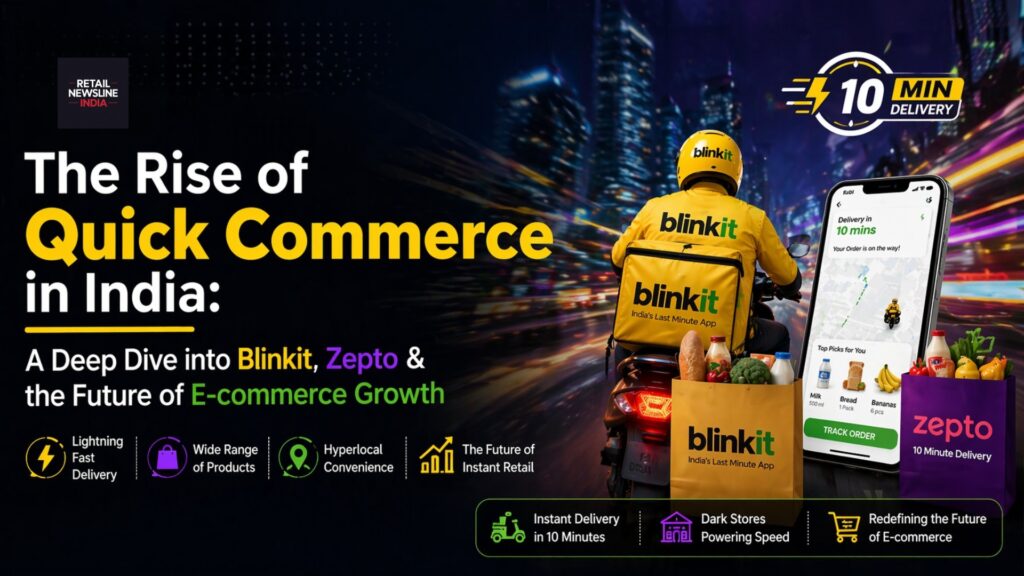
India’s digital commerce ecosystem is undergoing one of its most transformative shifts in recent years. What began as traditional e-commerce driven by marketplaces like Amazon and Flipkart has rapidly evolved into a new paradigm: quick commerce (Q-commerce).
At the forefront of this revolution are companies like Blinkit and Zepto, redefining how India shops by promising deliveries in 10–20 minutes.
This is not just a logistics innovation, it is a behavioral shift, a supply chain redesign, and a massive growth unlock for brands.
1. Understanding Quick Commerce: Beyond Fast Delivery
Quick commerce is not merely “faster e-commerce.” It represents a fundamentally different operating model.
Core Characteristics:
- Delivery within 10–30 minutes
- Hyperlocal fulfillment
- Limited but high-demand SKUs (2,000–5,000)
- Dark store-based operations
- High frequency, low ticket size orders
Unlike traditional e-commerce, which optimizes for scale and assortment, Q-commerce optimizes for speed and convenience.
2. The Evolution: From Big Baskets to 10-Minute Delivery
India’s journey:
Phase 1: Marketplace Era (2010–2018)
- Dominated by Amazon, Flipkart
- Delivery timelines: 2–5 days
- Focus: assortment, discounts
Phase 2: Grocery & Hyperlocal (2018–2021)
- Rise of BigBasket and Grofers
- Same-day / next-day delivery
Phase 3: Quick Commerce Boom (2021–Present)
Delivery expectation: instant gratification
3. Market Size & Growth Trajectory
India’s quick commerce market is growing at an unprecedented pace.
Key Metrics:
- Market size (2025): ~$3–5 billion
- Projected size (2030): $40+ billion
- CAGR: 40–50%
- Urban penetration: Rapid in Tier 1 & Tier 2 cities
Growth Drivers:
- Rising urban density
- Smartphone penetration
- Dual-income households
- Time-starved consumers
4. Blinkit: From Grofers to Instant Commerce Leader
Blinkit (formerly Grofers) has become a category leader after being acquired by Zomato.
Strategic Shifts:
- Rebranded to reflect speed-first positioning
- Shift from scheduled grocery to instant delivery
- Heavy investment in dark stores
Key Strengths:
- Dense urban network
- Strong supply chain
- Integration with Zomato ecosystem
Growth Highlights:
- Rapid expansion across metros
- Increasing average order value (AOV)
- Category expansion: electronics, beauty, essentials
Blinkit today is not just a grocery app—it is becoming a daily needs platform.
5. Zepto: The Challenger Built on Speed
Zepto disrupted the market with a bold promise: 10-minute delivery.
Founded by young entrepreneurs, Zepto focused on:
- Micro-warehousing
- Data-driven inventory
- Ultra-fast logistics
Key Differentiators:
- Highly optimized dark store placement
- Strong tech backbone
- Youth-focused branding
Growth Strategy:
- Aggressive city expansion
- Premium product assortment
- Private label development
Zepto’s positioning is clear: speed + experience + reliability
6. The Dark Store Model: Backbone of Quick Commerce
At the heart of Q-commerce lies the dark store model.
What Are Dark Stores?
Small warehouses located within residential clusters designed exclusively for online orders.
Key Features:
- 2,000–3,000 sq. ft.
- 2–3 km delivery radius
- High inventory turnover
Benefits:
- Faster delivery
- Lower logistics cost
- Better inventory control
Challenges:
- High real estate cost
- Operational complexity
- Demand forecasting
Dark stores represent a re-invention of retail infrastructure.
7. Consumer Behavior Shift: The Psychology of Instant Gratification
Quick commerce is not just about logistics—it is about human psychology.
Behavioral Changes:
- Shift from weekly to daily shopping
- Rise in impulse purchases
- Reduced brand loyalty
- Increased convenience dependency
New Consumer Mindset:
“Why wait tomorrow when I can get it in 10 minutes?”
This shift is reshaping:
- Basket size
- Purchase frequency
- Product discovery
8. Category Expansion: Beyond Groceries
Initially focused on essentials, Q-commerce now spans multiple categories:
Key Categories:
- FMCG & groceries
- Personal care & beauty
- Electronics & accessories
- Medicines
- Pet supplies
Platforms like Blinkit now deliver:
- Phone chargers
- Baby products
- Makeup kits
This evolution is critical for revenue expansion.
9. Impact on E-commerce Brands
Quick commerce is unlocking new growth avenues for brands.
9.1 Increased Visibility
Brands gain:
- Prime placement on apps
- High-frequency exposure
9.2 Faster Trial & Adoption
- Consumers try new products easily
- Lower friction in decision-making
9.3 Higher Repeat Purchases
- Frequent buying cycles
- Strong retention
9.4 Data-Driven Insights
Platforms provide:
- Real-time demand trends
- Consumer behavior analytics
10. Private Labels: The Silent Disruptor
Q-commerce platforms are aggressively building private labels.
Why?
- Higher margins
- Control over supply chain
- Better pricing flexibility
Impact:
- Increased competition for brands
- Pressure on pricing
Private labels could redefine brand dynamics in the next 5 years.
11. Logistics & Supply Chain Transformation
Quick commerce requires precision logistics.
Key Innovations:
- AI-based demand forecasting
- Route optimization
- Micro-fulfillment centers
Challenges:
- Last-mile cost
- Delivery workforce management
- Inventory accuracy
Efficiency is the only way to maintain profitability.
12. Unit Economics: The Big Question
Despite rapid growth, profitability remains a challenge.
Cost Factors:
- Delivery costs
- Warehouse rent
- Inventory holding
Revenue Drivers:
- Delivery fees
- Platform commissions
- Ads & promotions
Companies are working toward:
- Increasing AOV
- Improving order density
- Reducing delivery time per order
13. Role of Technology & AI
Technology is central to Q-commerce success.
Key Applications:
- Demand prediction
- Inventory optimization
- Customer personalization
AI enables:
- Faster decisions
- Reduced waste
- Better customer experience
14. Competition Landscape
Major players include:
- Blinkit
- Zepto
- Swiggy Instamart
Future competition may come from:
- Traditional retailers
- D2C brands
- Global entrants
15. Impact on Traditional Retail
Quick commerce is disrupting:
- Kirana stores
- Supermarkets
- Malls
However, many kiranas are adapting via:
- Partnerships
- Digital platforms
16. Tier 2 & Tier 3 Expansion
Growth is no longer limited to metros.
Opportunities:
- Rising disposable income
- Increasing digital adoption
Challenges:
- Lower order density
- Logistics constraints
Expansion will require localized strategies.
17. Regulatory & Policy Landscape
Key concerns:
- Labor laws
- Urban infrastructure
- Data privacy
Government policies will shape long-term sustainability.
18. Future Trends (2026–2030)
What to Expect:
- 5–10 minute delivery becoming standard
- Expansion into services (repairs, essentials)
- AI-driven hyper-personalization
- Integration with social commerce
19. Strategic Opportunities for Brands
To succeed in Q-commerce, brands must:
1. Optimize Packaging
- Smaller SKUs
- Instant consumption
2. Focus on Availability
- Stock consistency is critical
3. Invest in Visibility
- App placements
- Sponsored listings
4. Leverage Data
- Understand consumer patterns
20. Conclusion: The Future Is Instant
Quick commerce is not a trend—it is a structural shift.
Companies like Blinkit and Zepto are redefining:
- Consumer expectations
- Retail infrastructure
- Brand strategies
As India moves toward a $1 trillion digital economy, quick commerce will play a pivotal role in shaping the future of retail.
Frequently Asked Questions (FAQs)
What is quick commerce in India?
Quick commerce refers to ultra-fast delivery services, typically within 10–30 minutes, enabled by hyperlocal warehouses and optimized logistics.
How do Blinkit and Zepto work?
They operate through dark stores located near residential areas, ensuring rapid delivery using optimized supply chains.
Why is quick commerce growing so fast?
Factors include urbanization, convenience demand, smartphone usage, and changing consumer behavior toward instant gratification.
Is quick commerce profitable?
Profitability is still evolving, with companies focusing on scale, operational efficiency, and higher order values.
How can brands benefit from quick commerce?
Brands gain increased visibility, faster product trials, higher repeat purchases, and access to real-time consumer data.
What is the future of quick commerce in India?
The sector is expected to grow exponentially, expanding into new categories, cities, and services with deeper AI integration.