
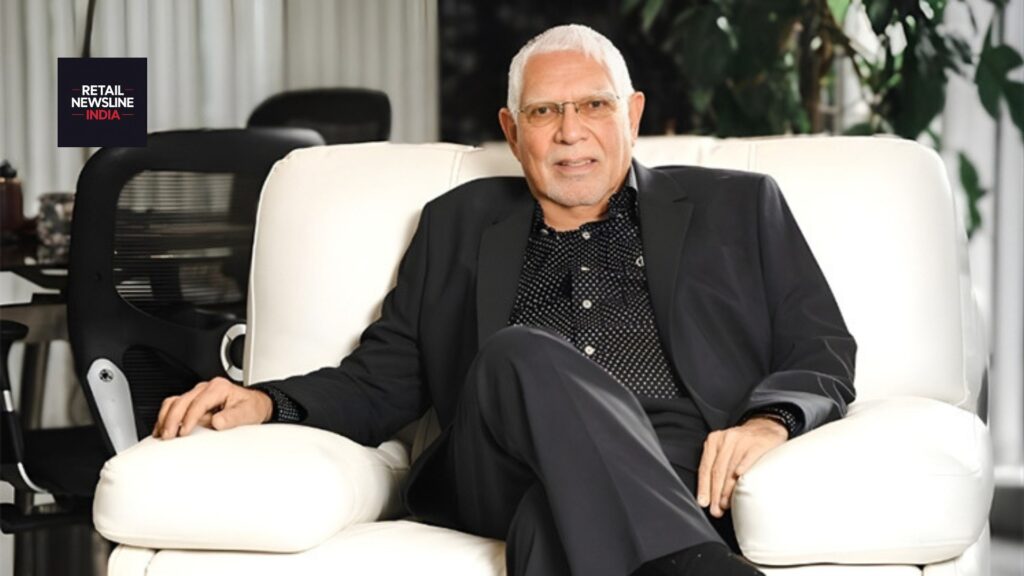
The Indian textile and apparel sector recently honoured one of its most influential leaders, Dinesh J Hinduja, with the prestigious TFI Lifetime Achievement Award.
The award ceremony took place at the KTPO Trade Centre, recognising Hinduja’s decades-long contribution to building India’s reputation as a global apparel manufacturing hub.
As former Executive Director of Gokaldas Exports, he helped transform the company into one of India’s largest garment exporters with annual revenues of ₹3,917 crore (US $431 million).
His leadership not only expanded the company’s scale but also strengthened India’s position in the global apparel supply chain.
Building One of India’s Largest Garment Exporters
Founded by Jamandas H. Hinduja, Gokaldas Exports evolved into a global manufacturing powerhouse under Dinesh Hinduja’s leadership.
Key milestones during his tenure include:
- Scaling operations to 52,000 employees
- Establishing 48 manufacturing facilities
- Strengthening relationships with global fashion brands
- Successfully taking the company public in 2005
These developments positioned Gokaldas Exports as a key player in India’s garment manufacturing and export industry.
Even after stepping down in 2011, the systems and governance structures established during his leadership continue to support the company’s global growth.
Industry Leaders Celebrate His Legacy
Several leaders from the global retail and textile ecosystem praised Hinduja’s contribution.
Sivaramakrishnan Ganapathi highlighted his relentless problem-solving ability and mentorship.
Meanwhile, Atul Ujagar credited him with strengthening India’s textile supply chain and improving global competitiveness.
From the global sourcing perspective, Nitin Prasad noted that Hinduja championed modern manufacturing practices and inclusive employment.
Ramanujam Venkat Raghavan added that his dedication to workforce development and innovation helped reshape global perceptions of Indian apparel manufacturing.
Why the Apparel Industry Meant So Much to Him
In an exclusive conversation with Apparel Resources, Hinduja reflected on what made the apparel sector special.
According to him, the industry thrives on a unique combination of creativity, commerce, and execution.
Every garment begins as a design concept and goes through multiple stages:
- Fabric sourcing
- Pattern development
- Manufacturing
- Quality control
- Global distribution
For Hinduja, the most fulfilling aspect was seeing a product evolve from a simple sketch to store shelves across international markets.
Equally meaningful was the human side of the business.
Thousands of workers, artisans, designers, and professionals collaborate daily to bring garments to life.
Mentoring young leaders and watching teams grow, he said, remains one of the most rewarding aspects of his career.
Trade Agreements Could Boost India’s Apparel Exports
Looking ahead, Hinduja believes new trade agreements could significantly improve India’s position in global apparel sourcing.
India has recently signed or negotiated trade agreements with major markets such as:
- The United Kingdom
- The European Union
- The United States
These agreements reduce tariff disadvantages that Indian manufacturers previously faced compared to competitors like Bangladesh and Vietnam.
However, Hinduja emphasised that tariff benefits alone will not guarantee success.
Indian companies must strengthen:
- Supply chain capabilities
- Vertical integration
- Manufacturing efficiency
- ESG compliance
Why India Needs More Large Apparel Manufacturers
According to Hinduja, global fashion brands increasingly prefer working with large, stable suppliers capable of handling complex production networks.
Large apparel manufacturers gain advantages such as:
- Better raw material bargaining power
- Investment in automation and technology
- Strong compliance systems
- Higher-value product manufacturing
Countries such as Vietnam have successfully grown exports by developing clusters of large apparel companies.
India, he believes, must replicate this model to expand its share of the global apparel market.
The Future of India’s Textile and Apparel Industry
Hinduja remains optimistic about India’s long-term prospects in apparel manufacturing.
Key strengths include:
- A large and skilled workforce
- Strong entrepreneurial culture
- Democratic stability
- Global sourcing diversification beyond China
However, he also warns about one major gap.
India still needs stronger backward integration in textiles, especially in:
- Man-made fibres
- Technical textiles
- Advanced processing infrastructure
Without these improvements, India’s apparel export growth could remain constrained.
Conclusion
The TFI Lifetime Achievement Award recognises the extraordinary impact of Dinesh J Hinduja on India’s apparel manufacturing industry.
By transforming Gokaldas Exports into a globally competitive exporter, he created a blueprint for building large, resilient apparel companies.
As the global fashion supply chain evolves, his leadership philosophy—focused on scale, governance, and workforce empowerment—continues to guide the next generation of Indian textile manufacturers.
FREQUENTLY ASKED QUESTIONS
Who is Dinesh J Hinduja?
Dinesh J Hinduja is the former Executive Director of Gokaldas Exports and a key figure in India’s apparel export industry.
What is Gokaldas Exports known for?
Gokaldas Exports is one of India’s largest garment exporters, supplying apparel to global fashion brands and operating dozens of manufacturing facilities.
Why did Dinesh Hinduja receive the TFI Lifetime Achievement Award?
He received the award for transforming Gokaldas Exports into a globally competitive apparel exporter and strengthening India’s textile manufacturing ecosystem.
What challenges does India’s apparel industry face?
Major challenges include supply chain gaps, limited backward integration in textiles, and global competition from countries like Vietnam and Bangladesh.
What is the future of India’s apparel exports?
Experts believe India has strong potential due to its skilled workforce, expanding trade agreements, and growing manufacturing capabilities.